Inside Wistar labs: research discoveries and therapeutic impacts

For well over a century, scientists at The Wistar Institute have pursued research that advances understanding of disease and opens new paths to treatment and prevention. From uncovering vulnerabilities in cancer cells to identifying novel vaccine strategies, Wistar researchers are generating fundamental insights with potential to improve human health.
Pancreatic Cancer Research
Dr. Dario Altieri, president and CEO of The Wistar Institute and Robert and Penny Fox Distinguished Professor, and his lab have identified a promising new therapeutic target for treating pancreatic cancer, one of the most aggressive and deadly cancers.
In collaboration with clinical researchers from ChristianaCare’s Helen F. Graham Cancer Center & Research Institute, Dr. Altieri and the Wistar team showed that defective mitochondria inside tumor cells “leak” double-stranded RNA into the surrounding cell. This leakage triggers inflammation that enables the cancer to grow. However, when the scientists used a drug to block two molecular sensors that detect the errant RNA and trigger inflammation, the cancer cells died while nearby healthy cells survived. In a murine model, this approach caused pancreatic cancer tumors to stop growing.
The researchers intend to further their findings, published in Proceedings of the National Academy of Sciences, by pursuing a drug that can inhibit the sensor molecules that trigger the inflammation response. They will also investigate how tumor cells damage mitochondrial membranes (which is how the double-stranded RNA escapes and starts the inflammation process) and if this mechanism can be stopped.
HIV Research
Dr. Amelia Escolano, assistant professor in the Vaccine and Immunotherapy Center, is making breakthrough strides toward developing an effective HIV vaccine. Her lab’s most recent vaccine candidate, WIN332, induced neutralizing antibodies against HIV after a single shot—the first time this has ever been demonstrated.
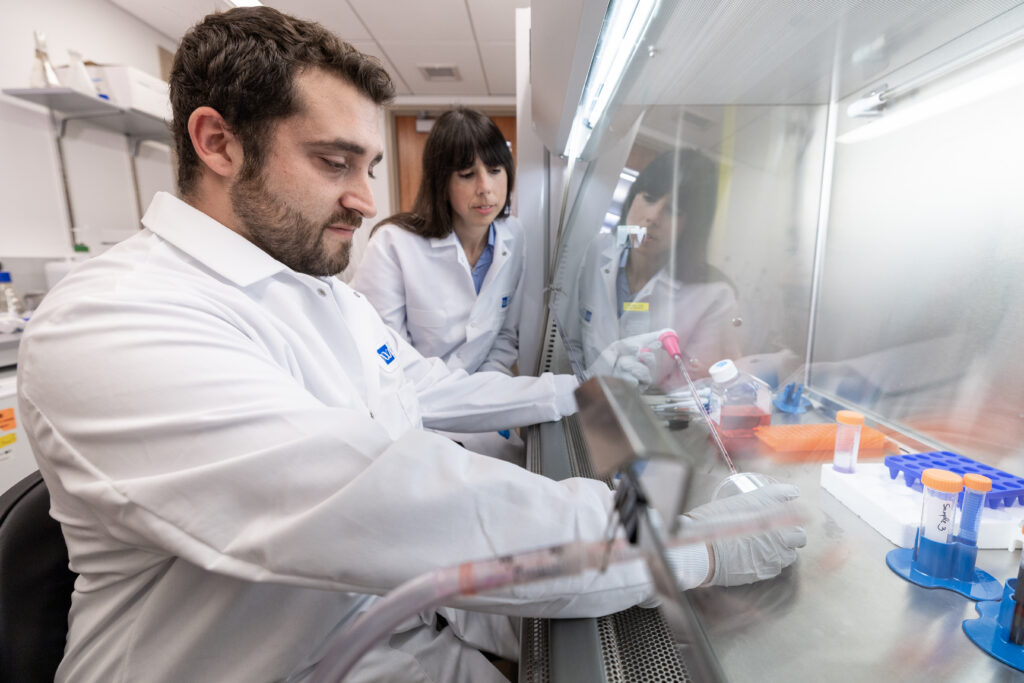
Dr. Escolano’s team engineered WIN332 by removing a particular sugar (the N332-glycan) from proteins protruding from the virus’s envelope, or outermost layer. This sugar was previously believed to be essential for antibodies to bind to the virus and get rid of it. In proving this assumption to be untrue, Dr. Escolano uncovered a whole new class of antibodies that don’t require the sugar for binding.
The promising results were published in Nature Immunology and have attracted interest from major global health organizations. WIN332 is now advancing toward human clinical trials.
Lymphoma Research
To treat a cancer like T cell lymphoma with immunotherapy, the therapy must be able to distinguish between healthy T cells, which fight the disease, and cancerous ones. Dr. David Weiner, director of the Vaccine & Immunotherapy Center and W.W. Smith Charitable Trust Distinguished Professor in Cancer Research, and his team have recently made headway with a two-vaccine approach that prevents tumors from evading the treatment. The findings were published in Cancer Immunology, Immunotherapy.
The first vaccine exploits a vulnerability in the biology of T cell cancers: clonality. Malignant T cells replicate by cloning themselves, which results in every cancer cell carrying an identical T cell receptor (TCR) on its surface. Dr. Weiner’s lab developed a vaccine to target that TCR “fingerprint,” thereby leaving the healthy T cells intact.
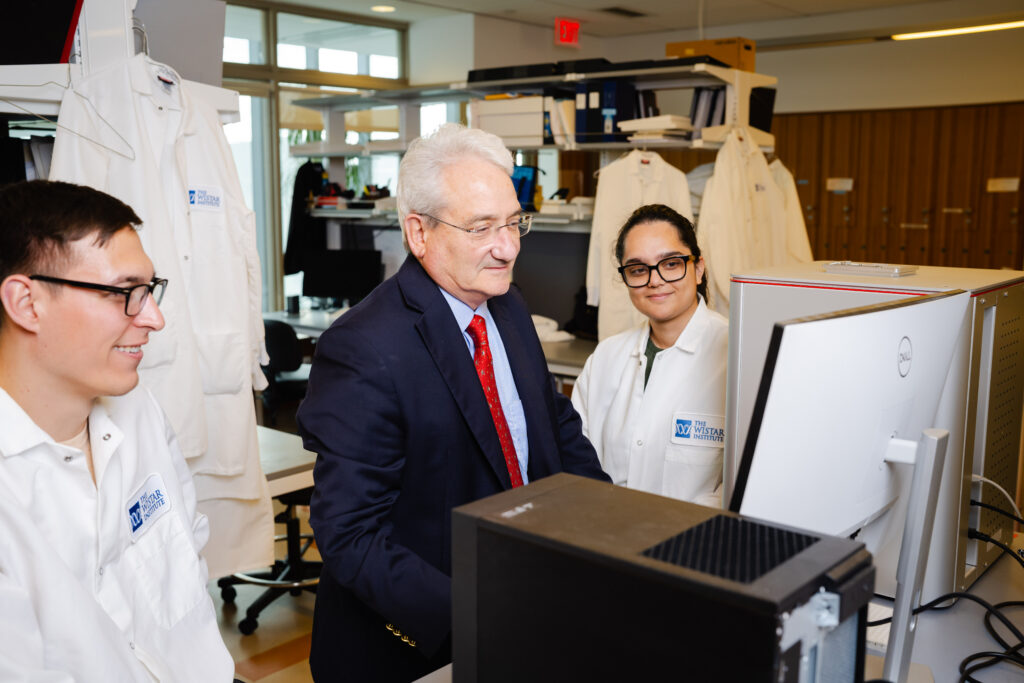
The researchers found that to evade this strategy, the tumor cells began to downregulate their TCR expression and “hide” from the vaccine. To counter this, Dr. Weiner’s team developed a second vaccine targeting 15 neoantigens (mutated proteins found only in the tumor cells, not healthy cells, due to DNA copying errors). When the two vaccines were administered together, they were able to kill more of the cancerous cells right away, giving the tumor less time to evolve evasion mechanisms and consequently proving more effective than either approach alone.
Drug Development
Dr. Joseph Salvino, a professor in the Molecular and Cellular Oncogenesis Program and scientific director of Wistar’s Molecular Screening & Protein Expression Facility, has developed a way to deliver a promising cancer therapy, AURKA, directly to tumors at significantly higher doses while reducing side effects.

Aurora kinase A (AURKA) inhibitor is an experimental cancer therapy that, when delivered on its own, quickly becomes toxic to healthy cells—which has limited its use. However, Dr. Salvino’s lab found that when joined with a molecule that binds to a protein called HSP90 (which cancer cells produce a lot of to help them survive stress), the resulting compound could be concentrated within the tumor and spare normal cells. The results were published in Molecular Cancer Therapeutics.
When they tested the combined compound in head and neck cancer, lung cancer, and melanoma cells as well as preclinical models, the researchers found up to 10 times higher concentrations inside the tumors than when the original AURKA inhibitor was used on its own. The compound also stayed in the tumor longer and was still active 24 hours after being injected (versus the original lone AURKA inhibitor, which was no longer detectable). The drug was also well tolerated in preclinical models, with no significant toxicity, and Dr. Salvino is looking ahead to developing a formulation that can be given orally.
Metabolism & Immune Regulation
Dr. Rahul Shinde, assistant professor in the Ellen and Ronald Caplan Cancer Center, and his team have discovered that hippuric acid—a metabolite produced by gut bacteria when breaking down plant-based foods—plays an unexpected role in immune responses during severe infection. In a paper published in Cell Reports, the researchers found that hippuric acid acts as an immune “amplifier,” boosting early inflammatory defenses but driving them to harmful extremes in sepsis. While levels of the metabolite initially dropped during infection in preclinical models, elevated levels in human sepsis patients were associated with significantly higher mortality. This suggests that while hippuric acid signaling is an important part of fighting ordinary infection, dysregulated signaling may contribute to life-threatening immune overreactions.
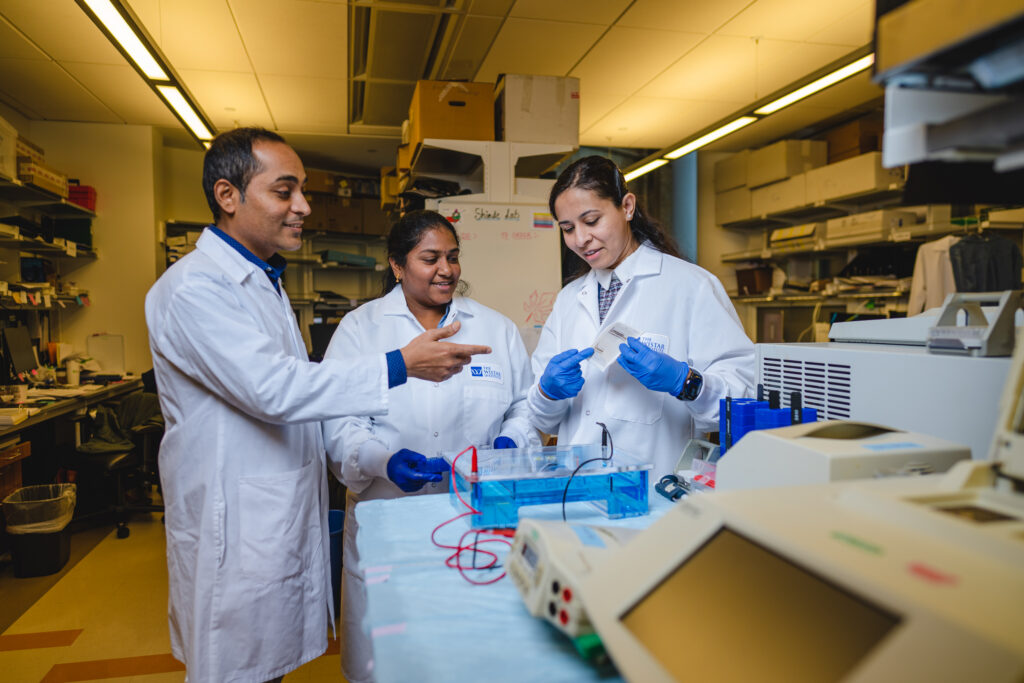
Further investigation revealed that hippuric acid also alters macrophage behavior by promoting cholesterol production and lipid remodeling, changes that sustain inflammation; blocking these metabolic pathways eliminated its effects. These findings position hippuric acid as a potential target for managing sepsis and other inflammatory conditions. In parallel, Dr. Shinde’s team is exploring whether this pathway could be leveraged in pancreatic cancer, where reprogramming immune cells to become more stimulatory could help overcome tumor defenses.