A legacy of giving: For more than 40 years, The W.W. Smith Charitable Trust has helped sustain Wistar Science

William Wikoff Smith—known to his friends and family simply as Bill—was a man of means. By the time he died at the age of 56, he had amassed a considerable fortune and accomplished more than many do in a lifetime. He grew an oil company into a multimillion-dollar conglomerate, built ships, sailed oceans, and became a skilled photographer.
He could have been content with those achievements. But beyond his business acumen and penchant for risk-taking, he held a deep-seated belief in giving back to the community.
In 1951, he established the W.W. Smith Foundation. For two decades, the Foundation supported charitable needs across Philadelphia. The Foundation was eventually liquidated, and its assets helped establish The Independence Seaport Museum on the Delaware River waterfront.
When Bill died suddenly in 1976, his will stipulated the creation of The W.W. Smith Charitable Trust. The Trust was designed to support medical science, basic needs, scholarships for secondary education, and maritime education—primarily within the five-county Philadelphia area and Camden, NJ.
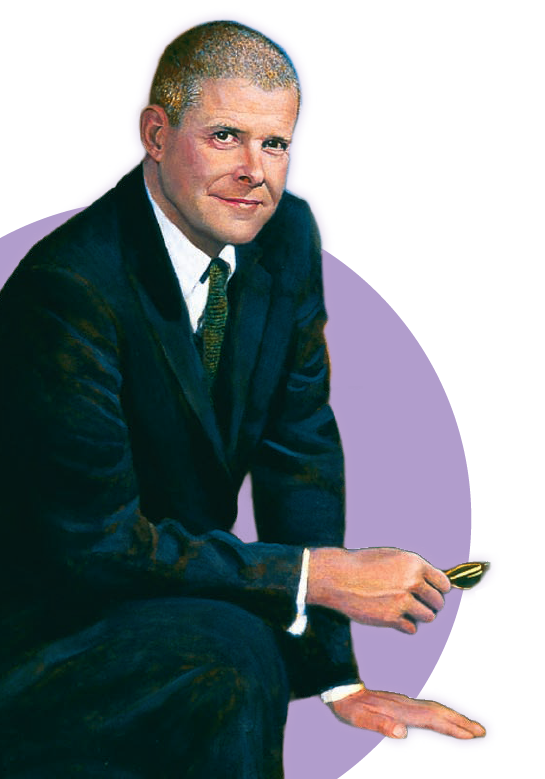
For Wistar, Bill’s Trust quickly became a critical support mechanism. In 1979, the W.W. Smith Charitable Trust approved its first grant to The Wistar Institute. Over the past 40+ years, Wistar has received 68 grants totaling nearly $10 million from the Trust—support that has grown alongside the Institute itself.
“I think it’s one of the wonderful things about our relationship – we grew alongside one another,” said Deborah McKenna, trustee and a member of the Smith family.
“When I was young we would go on site visits, and I remember going to Wistar and walking through basement offices with files in the hallway. Now you’re a state-of-the-art, modern facility that continues to attract top-of-the-line researchers.”
W.W. Smith’s support has allowed Wistar researchers to pursue groundbreaking studies of HIV, cancer, and heart disease. Most recently, a grant from W.W. Smith supported Dr. Alex Price’s research aimed at developing therapeutic interventions for EBV-driven cancers—a critical step toward improving outcomes for patients affected by EBV-linked cancer.
“This type of support is critical for junior investigators like me to break into new fields,” said Dr. Price. “W.W. Smith’s investment has come at a truly opportune time to help this brand-new project really get started from the ground up. We believe that this research could be a real breakthrough to directly target EBV-driven cancers.”
The Trust also endowed a Distinguished Professorship in Cancer Research for Dr. David Weiner. The endowment makes it possible for Dr. Weiner and his lab to develop immunotherapy approaches that are currently in clinical testing for HPV-associated cancer, prostate, liver, and other cancers.
Dr. Weiner said that the support has afforded him the opportunity to fully pursue his research in a way that leads to meaningful discoveries. “These long-term relationships are invaluable for advancing the science in my lab, and Wistar as a whole,” he explained. “W.W. Smith’s sustained support gives us the time and confidence to take the risks that lead to transformative biomedical discoveries and enduring impacts on human health.”
Other Wistar leaders point to shared values as a key reason the relationship has flourished over time. Michael Criscuolo, Wistar vice president of Development, sees aligned priorities at the heart of the partnership.
“Both Wistar and W.W. Smith prioritize scientific excellence and lasting impact,” explained Criscuolo. “W.W. Smith understands the importance of patience and trust in achieving meaningful biomedical progress, and their willingness to support the evolution of our investigators’ discoveries aligns strongly with Wistar’s commitment to ambitious, curiosity-driven research.”
Louise Havens, program officer for the Trust’s Medical Research pillar and another Smith family member, understands that it can take time to reap the benefits of biomedical research, and long-term support is critical to keep it moving.
“Wistar’s strength is the early foundational research, and without support, those early ideas don’t have a chance to become the next treatments or cures,” she said. “Medical progress has to start somewhere, and it’s important to invest in that research so Wistar scientists can move the discoveries forward.”
In the Greater Philadelphia region, the impact has been profound. Since 1977, The W.W. Smith Charitable Trust has distributed nearly $300 million across the area, fulfilling Bill’s wish to strengthen the community through sustained, practical philanthropy.
For the family that continues to manage the Trust, having the opportunity to give back to the community is a gift in and of itself.
“It’s a privilege to be able to do this work, and we look forward to seeing future generations take over and continuing the work,” said Deborah. “The Trust is helping to support and care for people and hopefully making their lives better because of what we can offer.”