Opening doors, building futures: How Wistar becomes part of the people it helps shape

When Gonul Newman emigrated to the United States from Turkey, she arrived with a background in chemical engineering and an interest in the biopharmaceutical industry. What she didn’t have were industry connections, a strong social network, or a clear path forward.
She enrolled at the Community College of Philadelphia, where ended up taking a Microbiology course with Dr. Kristy Shuda McGuire (who would later become Wistar’s Dean of Biomedical Studies). Through the class, she heard about Wistar’s Biomedical Technician Training Pre-apprenticeship Program, where she could gain hands-on experience with biomedical protocols and procedures.
“As someone who learns best by doing, it was exactly what I was looking for,” she said. “So, I jumped at the chance and enrolled.”
After graduating from the BTT Program in 2015, she took a role at a local startup and later became an analyst in the CAR-T Quality Control laboratory at Johnson & Johnson. “As an analyst, I use everything that I learned at The Wistar Institute,” she said.
While her experience at Wistar made a profound difference in her career path, it also forged a deep appreciation for the role places like Wistar can play in people’s lives. Today, she’s not only a BTT graduate and proponent of the Program, but also a regular donor to Wistar.
“I wanted to support other immigrant women like me, since I know first-hand the hardships they face in their first few years—lack of a social network, language barriers, and financial difficulties,” she said. “I am truly grateful that there are places like The Wistar Institute.”
Wistar’s impact often draws people back—not only to support the Institute charitably, but also to continue advancing their careers. One example is Dr. Katherine Aird.
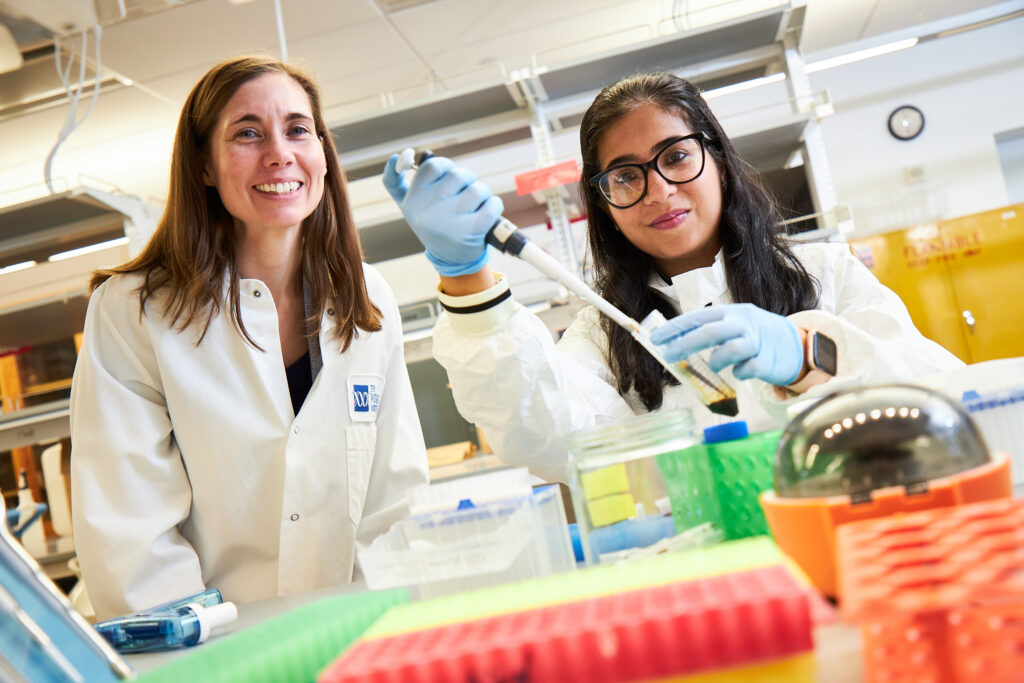
Dr. Aird arrived at Wistar in 2012 as a postdoctoral trainee after her principal investigator (PI) moved his lab from Fox Chase Cancer Center. “I remember when I first came here, I was impressed with how vibrant the scientific community was,” she said. “There were a lot of seminars, both here and at Penn, and there was strong support for postdoctoral fellows. I even remember a seminar specifically for trainees on K99 grants.” (These help early-career researchers advance toward independence.)
After earning a K99 Pathway to Independence Award in 2017, Aird started her independent lab at Penn State College of Medicine and later moved to the sprawling research system that is the University of Pittsburgh School of Medicine and UPMC Hillman Cancer Center.
Even as her career advanced, Dr. Aird never forgot her early experience at Wistar.
In 2025, she decided to return to Wistar as a professor and co-leader in the Ellen and Ronald Caplan Cancer Center. She said the move was driven in part by the strength of the Institute’s Shared Resources, along with an environment where it’s easy to collaborate and communicate with researchers and staff across the organization.
“There’s this feeling that we’re all working together toward a common goal,” she said. “Everyone is on the same level and willing to support our mission.”
Another researcher, Dr. Italo Tempera, spent his postdoctoral years at Wistar before leaving to start his independent lab at Temple University. In 2020, he made the decision to return to Wistar to pursue research into EBV-related cancers.
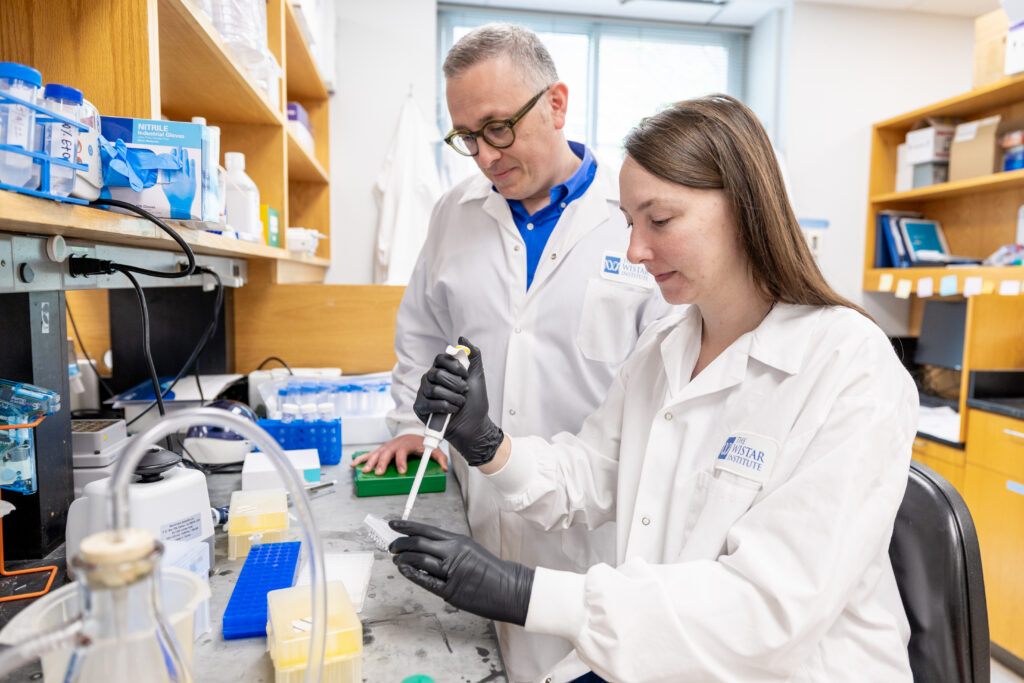
“I knew very little about Wistar initially, but my postdoctoral experience here was excellent,” he said. Calling it a “sugar rush for science,” he attributes the positive experience to the people and the rigor of the research, both of which were key in drawing him back to the Institute in 2021.
“Wistar has a vision,” he continued. “We never stop advancing the science and taking it to the next level. Everyone, whether it’s the faculty or the administrative staff, continues to move in the same direction.”
There are countless examples of researchers and staff who have built their careers at Wistar—or found their way back. Wistar leaves a lasting mark: opening doors, nurturing talent, and creating a sense of purpose and belonging that stays with people long after they leave. For many, it is more than a workplace or training ground—it is a community that helps shape who they become and inspires them to give back, return, and carry its mission forward.