From the lab to the classroom: How Wistar is expanding access to hands-on science education

IN A NINTH-GRADE BIOLOGY CLASSROOM AT CARVER HIGH SCHOOL OF ENGINEERING AND SCIENCE IN NORTH PHILADELPHIA, more than 30 students break out in groups and cluster around a series of small instruments, each about the size of a paperback book, perched on counters around the room’s perimeter. Dr. Jason Diaz, education program director of Teaching, Learning and Collaboration in Wistar’s Hubert J.P. Schoemaker Education and Training Center, stands near the front of the room, explaining the task at hand: to run a small sample of cervical cancer cell DNA through an agarose gel base using electricity, a process known as gel electrophoresis, and determine whether a sample is positive or negative for Human papillomavirus (HPV), the primary cause of cervical cancer.
Using a pipette, students carefully transfer 10 microliter samples—a volume no larger than a matchhead—into small gel-filled recesses at the top of the device known as “wells.” Once complete, an electrical current will travel from the top of the device down to the bottom, separating DNA fragments into visible horizontal bands based on size. Later, with the help of Dr. Diaz and two assistants from Heights Philadelphia, a key education partner in this outreach effort, students will analyze what they see to determine whether the samples are HPV positive or HPV negative.
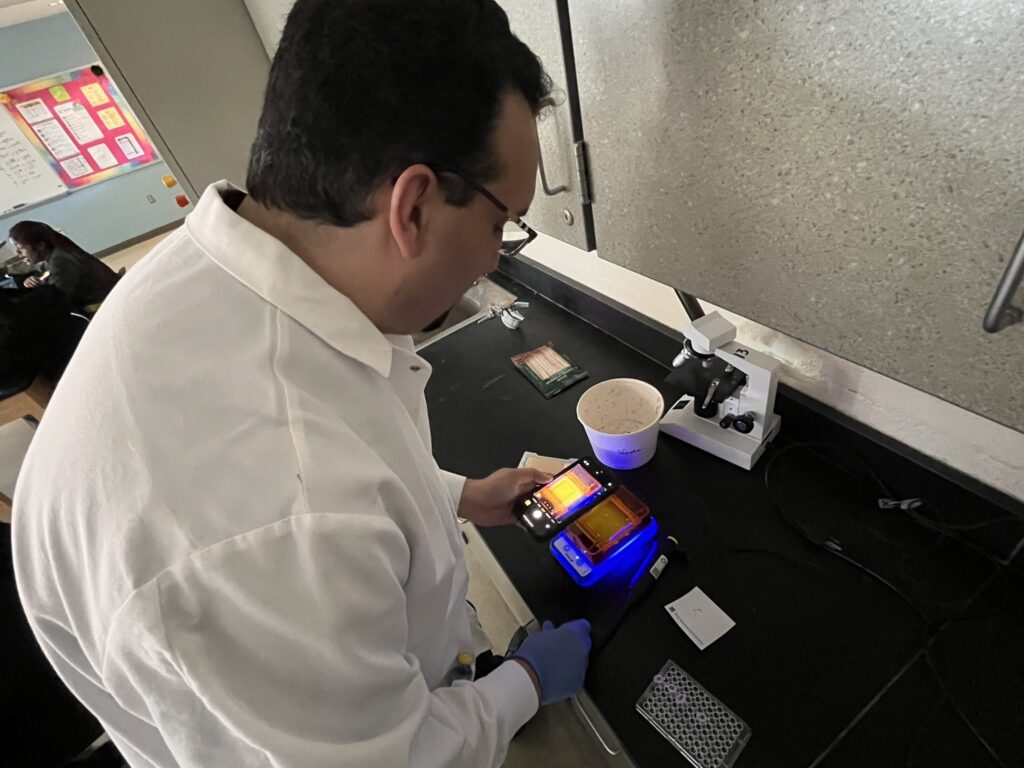
This is the very same work Wistar researchers perform in the lab every day, but Dr. Diaz and his team have packaged the science and brought it into the classroom to expose students to the practical applications of their biology lessons.
“When I arrived at Wistar in 2022, I wanted to explore how to bring authentic research experiences into the classroom,” explains Dr. Diaz. “I’ve adapted activities we use in the lab connected to cancer research—micropipetting, gel electrophoresis, analyzing DNA data—to introduce students to hands-on work that supplements classroom learning.”
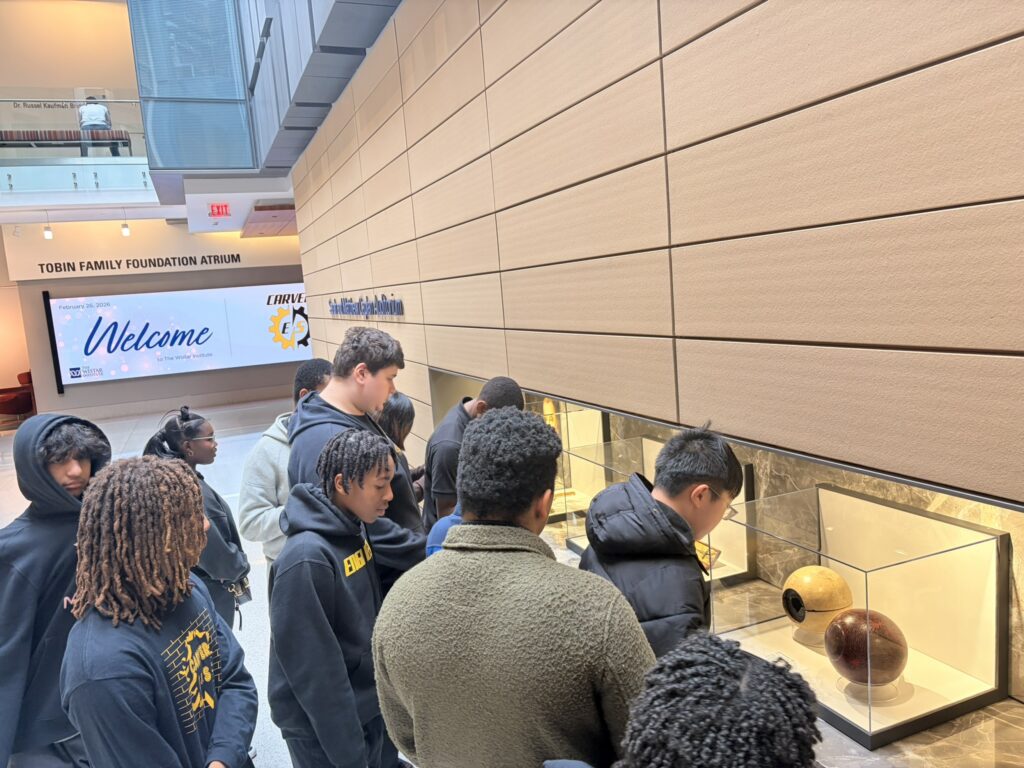
A few weeks later, students from the same Carver biology classes arrive at The Wistar Institute for a tour, where they get a glimpse into the work of its researcher and the technology that helps make it possible. The students hear from scientists about the research they are doing at Wistar, and are able to ask questions about their career journeys. For most students, it’s the first time they’ve set foot inside a working lab, interfaced with actual scientists, or imagined the potential science-focused careers that are possible—which is entirely the point.
“I saw an opportunity to bring Wistar science into the classroom, as a component of the curriculum, using newer inquiry-based models to learn biology,” explains Dr. Diaz. “This is informed by my experience as an undergraduate teacher, where bringing real research into the classroom has tremendous benefits to students’ ability to learn and persist in their science careers.”
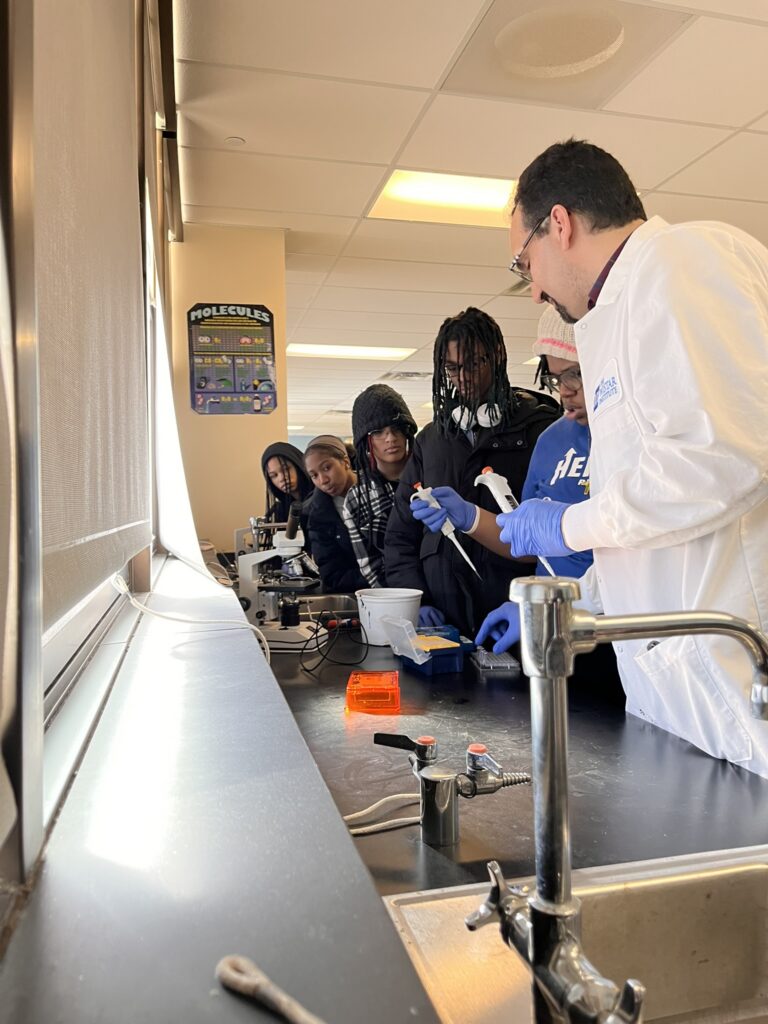
Wistar’s efforts to teach science-focused high school students dates to 1994, when it first launched the High School Fellowship in Biomedical Research. This program has been supported by the Pincus Family Foundation, Rich and Lily Siegel, and the Hamilton Family Charitable Trust.
The intensive, 4-week program, which accepts 15 students each summer, not only gives participants hands-on experience with the tools and techniques of a working lab but also exposes them to the numerous career paths available to science-minded students.
“High school students have a limited idea of careers related to health research, and the ways in which students learn science do not always align with the way science happens on the job,” explains Dr. Diaz. “There are many reasons why it’s difficult at this level to provide authentic research experiences. Wistar plays an important role opening our spaces to students in a very thoughtful and intentional way.”
Unlike many other programs, Wistar’s Summer Fellowship is free, includes a weekly stipend and covers transportation costs for participants. For students facing pressure to earn summer income, or for families without the resources to cover the cost of an educational program, this can dramatically shift the calculus and remove barriers to an opportunity that could be life-altering.
Dr. Diaz dreamed of taking aspects of the Summer Fellowship and making them available to a broader student base, namely high schoolers in the Philadelphia School District. Because the system is so vast—57 high schools in total—it was critical to identify a partner with established relationships and resources that could help formulate the approach.
“Heights Philadelphia is committed to helping high school and college students receive the support, enrichment and opportunities to succeed in their academics as well as in their careers. That approach syncs with Wistar’s commitment to making science accessible to all,” explains Dr. Diaz.
With support from Heights, Dr. Diaz developed the in-class “wet-bench” model, first with Kensington Health Sciences Academy (KHSA) and now with Carver.
In addition to the programs that Dr. Diaz has launched at KHSA and Carver, he is also working on a computer science curriculum that is in its early stages at George Washington High School, and a high school version of Wistar’s existing Life Science Innovation program, which teaches students how to translate research discoveries into real technologies and therapies. These curricula will expand on the “wet-bench” model by exposing students to what happens before and after the work at the bench, namely, digging through large data sets to identify interesting patterns to explore, and strategizing ways to position a new technologies to serve patients in a complex healthcare landscape.
Long term, he hopes to develop the curricula into something that can be handed off to teachers, with support from Wistar.
“I don’t expect any school to use all three curricula. Each teacher will decide what is useful. My commitment is to support instructors and continue evolving the curriculum alongside them. The biopharmaceutical industry is huge, and Philadelphia is an amazing place for it!”
And thanks to Wistar, now even more students know it.